
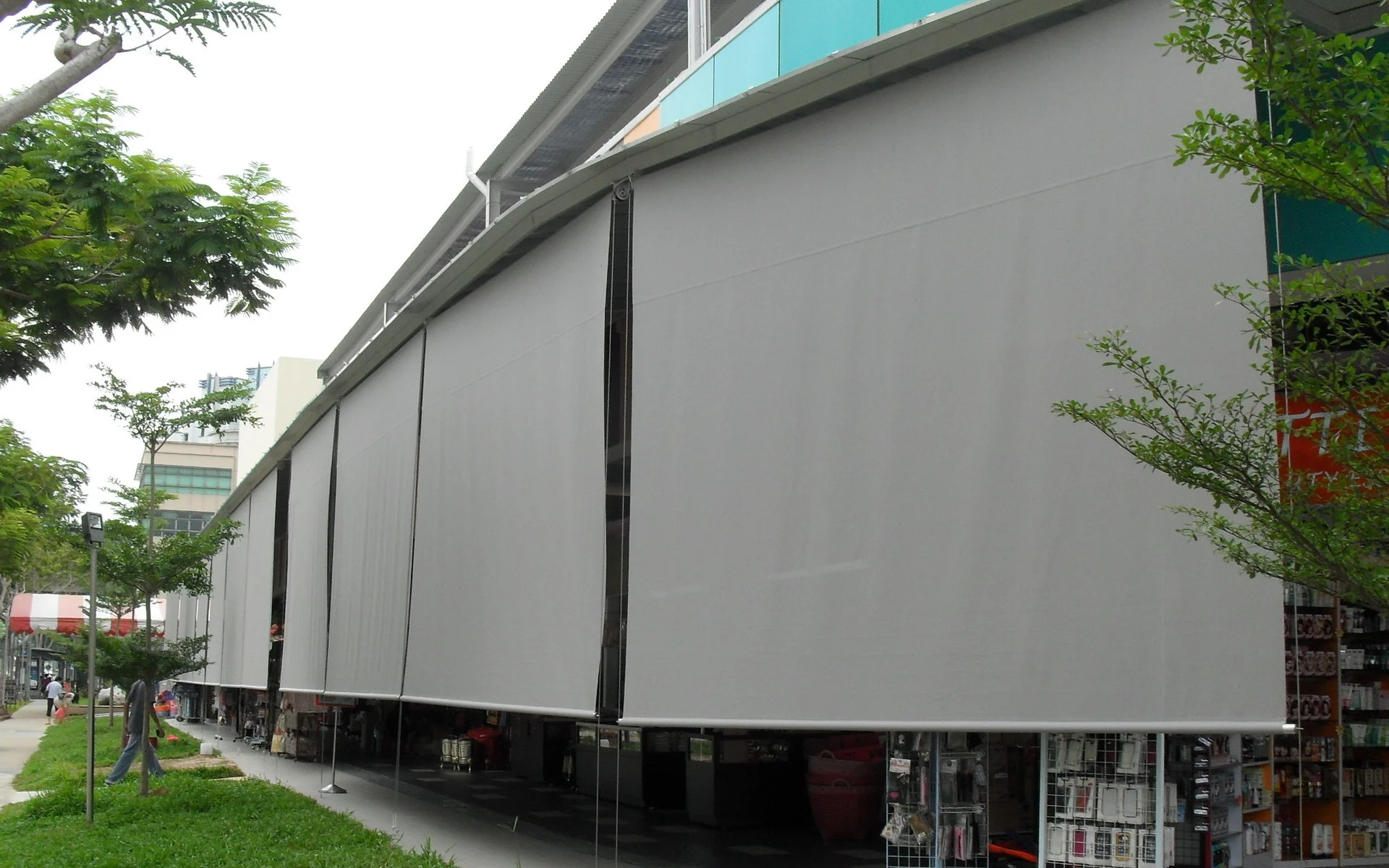
An outside roller shade built for Singapore needs three things working together: a fabric that resists UV breakdown, a frame that won't corrode in constant humidity, and a guide system that keeps the panel from flapping loose in gusts. PVC coated fiberglass and acrylic sunscreen mesh are the two materials doing most of the heavy lifting locally, paired with aluminium alloy frames and stainless steel hardware. Get any one of those three wrong and the shade either fades within a year, rusts at the brackets, or tears loose in a storm.
Singapore doesn't really give an outside roller shade a break. Data from the National Environment Agency, adapted through Singapore's official statistics platform, tracks air temperature, sunshine, humidity, and rainfall on an annual basis from a climate station at Changi, and the numbers explain why so many balcony blinds here fail fast. Francia has been building shading systems for this exact climate, and the fabric choice behind an outside roller shade matters more than most homeowners assume going in.

What Makes An Outside Roller Shade Different From Indoor Blinds
An indoor blind only has to look good and block light. An outside roller shade has to survive direct sun, sideways rain, and wind load, all while still doing the light-blocking job. That's a much longer list of requirements packed into what looks like the same rolled fabric tube.
- Fabric must resist UV degradation, not just filter light.
- Hardware must be corrosion resistant, since indoor-grade metal rusts fast outdoors.
- The panel needs a guide system (cable or track) to stop it swinging in wind.
- Bottom bars or locking mechanisms anchor the shade so it doesn't flap loose.
An outside roller shade that skips any of these usually needs replacing within two to three years instead of the decade or more a properly specified system can deliver.
How Do Weatherproof Fabrics Actually Resist Rain And Humidity
PVC coated fiberglass, one of the materials Francia uses in its cable guided roller blind systems, resists water absorption because the coating seals the woven fiberglass core rather than letting moisture soak in. That matters in a climate where humidity rarely drops much below 80 percent. Acrylic and sunscreen mesh fabrics work differently, staying water resistant rather than fully waterproof, which is why they suit sheltered patios better than fully exposed balconies facing driving rain.
Which Fabric Materials Hold Up Best Against Direct UV Exposure
Singapore's UV index runs high enough that NEA maintains a dedicated historical dataset just to track it hour by hour, and fabric that isn't UV stabilised will chalk, fade, or go brittle within a season or two of that exposure. Not every fabric handles it the same way.
- PVC coated fiberglass resists fading and holds colour longer under direct sun.
- Acrylic canvas performs well against UV fading but is less waterproof.
- Sunscreen mesh fabrics cut glare and heat while keeping some visibility through.
- Fire rated fabric ranges add a safety layer for commercial or MCST-regulated buildings.
Picking the wrong one here shows up as chalky, discoloured fabric well before the frame or motor ever gives out.
How Much Wind Can An Outside Roller Shade Safely Withstand
This is where a lot of budget installations fall apart, literally. A free-hanging fabric panel without side guides will billow and eventually tear loose in a strong gust, and Singapore's thunderstorm squalls arrive with little warning. Side channel guides, whether cable or aluminium track, keep the fabric edge locked so wind pressure gets distributed along the frame instead of catching the panel like a sail. It's a small structural detail that makes the difference between a shade that survives monsoon season and one that doesn't.
What Should HDB And Condo Owners Check Before Installing
Before booking a measurement, it helps to know what's actually allowed. HDB rules generally permit only roller or retractable blinds, and they must sit within the balcony area without blocking emergency exits, while condo installations typically need sign-off from the Management Corporation Strata Title before anything goes up. Drilling into structural beams or building facades is a separate approval step homeowners sometimes miss until the installer flags it on-site.
How Do Homeowners Actually Rate Weatherproof Outdoor Shades
Why Choose Francia?
Francia has fitted shading systems across Singapore homes and commercial properties for decades, working with fabric ranges that span PVC coated fiberglass through to fire rated commercial grades. Installations come with aluminium alloy framing and stainless steel hardware chosen specifically for tropical humidity, not adapted from temperate-climate stock. Site visits, measurement, and quoting are handled directly rather than through a subcontracted layer.
An outside roller shade is only as good as the fabric and mounting behind it, and getting that combination wrong is an expensive mistake to fix later. If you are weighing fabric options against Singapore's sun, rain, and wind, get in touch with Francia today and have a specialist assess the exposure level of your specific space before you commit to a system.

